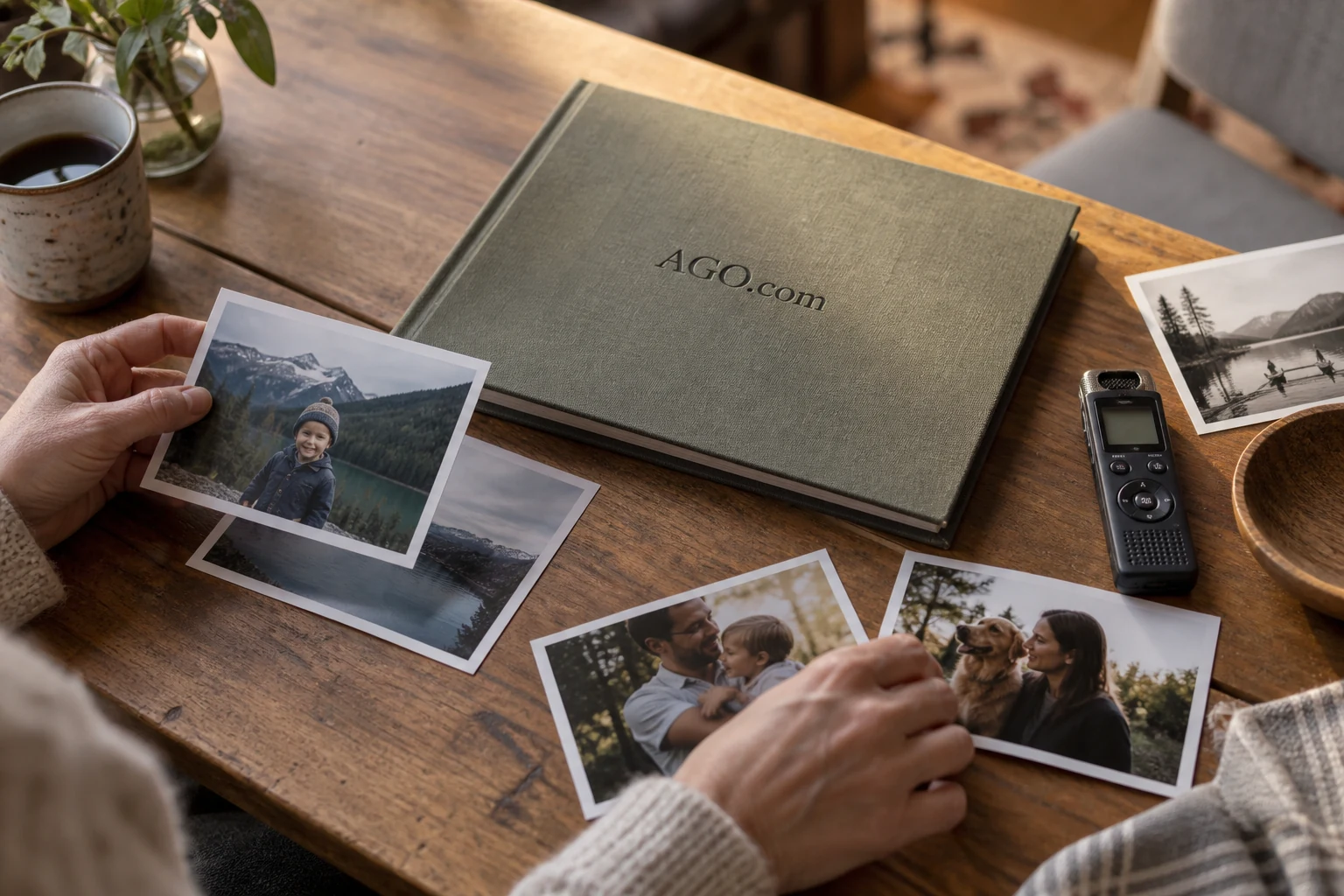
This is an illustrative business concept for AGO.com. The domain is available to acquire; the platform described here has not been launched. A personal-history product could begin with a modest promise: help someone finish one collection of stories that the people they care about can actually find and enjoy.
AGO is a natural fit for recollection. The word looks back, while a product built around it could help families decide what to carry forward. The useful work would happen after that first impression, through patient prompts, clear permissions and a collection that feels manageable on an ordinary weekend.
Start with one person and one occasion
The first customer could be an adult organizing a parent's stories before a milestone birthday. That customer has a reason to begin, a likely set of contributors and a date by which something should exist. An open invitation to archive an entire life can feel exhausting. A project called “Ten stories for your seventieth birthday” gives everyone a smaller, understandable job.
The first offer might include a private collection, ten interview prompts, voice recording, photo uploads and a printable booklet. Each prompt should stand alone. Ask about the first home someone remembers, a meal they learned to cook or a friend who changed a decision. Allow a participant to skip any question. The product should make room for an uneven collection: a long answer in one place, a photograph and two sentences in another.
Make permission part of the story
An organizer should not automatically gain the right to publish everything a relative contributes. In this concept, a contributor would choose who can hear a recording and review the text before it appears in the shared collection. Private drafts, family-only stories and a specifically approved public excerpt would have different controls. These are proposed product choices, not statements about a service operating today.
A tricky example is a story involving another living person. The interview subject may be comfortable telling it while the person named is not. The editing screen could flag names for the contributor to review and provide a simple way to replace one with a relationship, such as “a former colleague.” The product would also need a clear withdrawal process. Removing a story from the online collection and removing it from a booklet already downloaded are different actions, and the interface should explain that difference before sharing.
Keep the original alongside the edited version
A transcript makes an interview easier to search, but a voice carries pauses, laughter and pronunciation that text cannot fully replace. The collection could retain the original audio while letting a family correct the transcript. A small label should identify the speaker, approximate date, editor and any uncertain names. If nobody remembers the year, “around 1985” is more useful than silently choosing an exact date.
The Library of Congress personal archiving resources cover photographs, audio, video, email and other digital materials. That range is a useful reminder when defining an export. A family archive should be able to leave the product with its recordings, images and descriptions together, rather than as a handsome page that loses its source files when an account closes.
Design the collection for a second visit
Imagine a niece looking for the story about her grandmother's first apartment. She remembers a city, not the interview date. A useful collection would offer people, places and topics as routes into the material. It could show a simple list of stories before presenting a large timeline. An unknown date should not make a contribution hard to find.
The reading experience should work for relatives with different access needs. Text size, visible playback controls and a transcript beside audio would be part of the initial product. The W3C guidance on headings explains how headings communicate page organization and support navigation. A family collection benefits from that same plain structure: a person's name, a story title and clearly separated supporting material.
Find the first customers through a specific occasion
A pilot could be introduced through independent family photographers who already help customers mark anniversaries and birthdays. The proposal would be a limited collaboration: invite a few interested customers to try one story collection, explain the time commitment and ask the photographer to give candid feedback about the handoff. There is no need to begin with a broad marketplace of interviewers.
For the pilot, manually help with setup and observe which parts need assistance. Count completed contributions, requests for help, successful downloads and returns to the collection after the occasion. Ask separately who would pay: the organizer, several relatives together or the person whose stories are being collected. A gift purchase and an ongoing subscription create different expectations about access.
Prove the handoff before expanding
The operational test is simple to describe and demanding to deliver. Can one organizer invite three relatives, collect ten contributions, resolve permission questions and give everyone a useful finished collection? Try that sequence before adding automatic video editing, public discovery or a large library of prompts. Keep a record of each point where someone hesitates or asks another family member to take over.
A founder interested in this direction could prototype one collection with consenting adults and sample materials, then review the experience together. The output should include a readable collection, a complete export and a clear answer to who controls each contribution. If this is a direction worth building under AGO.com, the inquiry form begins a conversation about acquiring the domain. The product, its safeguards and the relationships behind it would be the buyer's work to develop.